• Home
  • Latest
  • Fortune 500
  • Finance
  • Tech
  • Leadership
  • Lifestyle
  • Rankings
  • Multimedia

Trendingnow

1

The millennial generation has split, new Fed research shows: Those over 35 are edging toward boomer-style wealth, while everyone else falls behind

2

Mark Cuban says he has the solution to growing income inequality, and it's to reward every employee—from CEO to janitor—with company stock

3

Mathematicians grapple with a ‘very rapid and very unsettling change’ as AI cracks yet another century-old problem

1

The millennial generation has split, new Fed research shows: Those over 35 are edging toward boomer-style wealth, while everyone else falls behind

2

Mark Cuban says he has the solution to growing income inequality, and it's to reward every employee—from CEO to janitor—with company stock

3

Mathematicians grapple with a ‘very rapid and very unsettling change’ as AI cracks yet another century-old problem
AICulture

We talked to 12 tarot card readers who are using AI. They split in 2 camps, with big implications for the technology

By
Ziv Epstein
Ziv Epstein
,
Farnaz Jahanbakhsh
Farnaz Jahanbakhsh
,
Vana Goblot
Vana Goblot
, and
The Conversation
The Conversation
Down Arrow Button Icon
By
Ziv Epstein
Ziv Epstein
,
Farnaz Jahanbakhsh
Farnaz Jahanbakhsh
,
Vana Goblot
Vana Goblot
, and
The Conversation
The Conversation
Down Arrow Button Icon
May 16, 2026, 11:00 AM ET
tarot
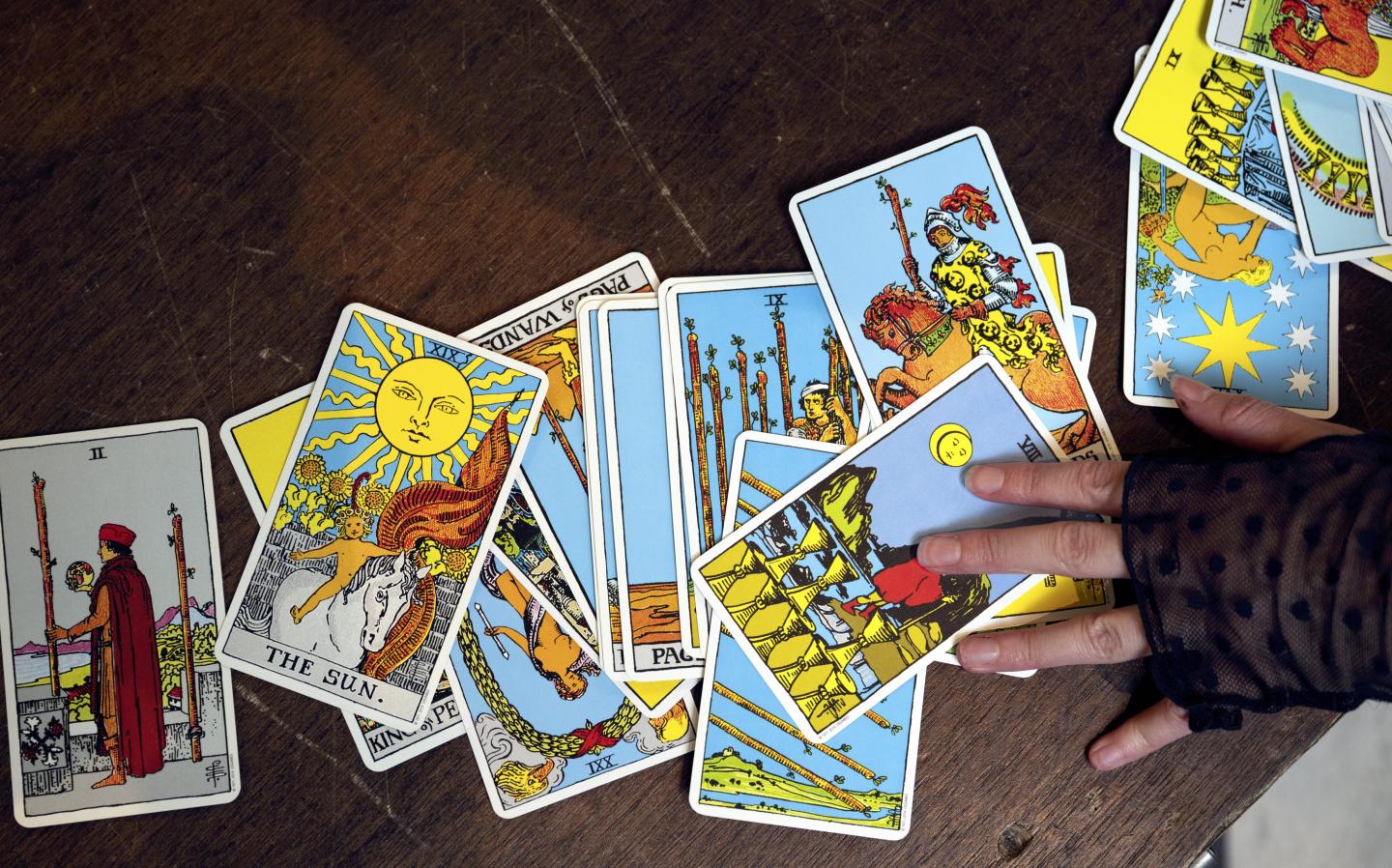
Tarot cards are popular, and so is AI.Marvin Joseph/The Washington Post via Getty Images
Add Fortune on Google for similar content.

If you’ve ever turned to artificial intelligence to try to figure out how to handle a tricky situation with a friend or colleague, you’re far from alone. For many, AI has become a modern oracle – a source of guidance, emotional support or clarity in moments of uncertainty – though critics worry that they could lead to emotional dependence on the technology.

Recommended Video

Of course, the urge to seek answers from forces beyond ourselves is hardly new. For generations, people have turned to psychics, astrology charts or tarot cards for reassurance.

Once fringe, these practices have increasingly become mainstream. According to a 2025 Pew Research survey, nearly 1 in 3 Americans consult tools such as tarot or astrology at least once a year, interest that’s thought to largely be fueled by Gen Z and social media.

Now, we’re seeing these two forces – AI and occult practices – meeting in strange and fascinating ways. An increasing number of tarot readers, from novices to seasoned practitioners, have been turning to AI to help make sense of their tarot readings.

What makes this pairing so striking is that interpretation is the whole point of tarot. And yet AI often brings little knowledge of your history or your unique situation when it dispenses advice.

In a study published in April 2026, we examined which aspects of the practice that tarot readers were delegating to AI, and how the technology was shaping their interpretations.

Watching what happens when readers hand that important interpretive step to AI may offer a glimpse of what helpful AI guidance could look like – and where it could go wrong.

The mainstreaming of occult practices

Tarot cards are experiencing a revival.

Tarot did not start out as a spiritual or fortune-telling tool. It began as a popular card game in the Italian Renaissance, before spreading across Europe.

Over time, readers and occultists layered the cards with mystical symbolism drawn from Kabbalah, Egyptology, numerology and other mystical and symbolic traditions. In the early 20th century, the British publisher William Rider & Son released the Rider-Waite-Smith deck, which became the most popular tarot deck in the English-speaking world.

Whereas only a handful of tarot decks were being published in the early 1970s, today thousands of tarot and oracle decks are in circulation. A standard tarot deck contains 78 cards, each carrying its own symbolic meaning. Practitioners use the cards to sit with hard questions, which can range from difficult relationships to world events: Should I leave my partner? Is this job worth it? What’s going to happen with Donald Trump and the Strait of Hormuz?

After cards are pulled, their meanings are interpreted through the lens of the reader’s question, circumstances and life history.

Someone asking about a relationship and drawing the Tower card, for instance, might read it as impending rupture, or as false assumptions finally giving way. Which reading fits depends on the other cards, the specific question and what the reader already knows about their own situation.

This stands in contrast to AI, which is primed to produce a seemingly definitive answer, even when it’s unaware of the nuances of your situation and context.

The adoption of AI in tarot reading

For our study, we interviewed 12 tarot practitioners about their use of AI in readings they did for themselves.

They generally found themselves pulled in two directions.

On the one hand, they often sought explicit guidance from AI in the process of self-reflection. By using AI to interpret the cards, they could sidestep the frustration of interpreting many cards in light of the question asked.

Say someone drew the Fool and the Ten of Wands for a question about a career change. The Fool points toward a leap into the unknown, while the Ten of Wands speaks to burnout and an unsustainable load.

But do the cards say, “Leave, you’re exhausted and something better awaits”? Or “Leave, and the new job will be just as demanding”?

Rather than sit with that ambiguity, some readers simply ask the AI for the meaning of the reading.

A middle-aged woman wearing glasses smiles and gazes at a large, blue tarot card in her right hand.
An attendee at Google’s 2025 I/O developers conference wears Android XR glasses with Gemini AI, which she’s using to interpret a tarot card. Camille Cohen/AFP via Getty Images

For more challenging readings, AI’s “yes man energy” helped them feel more confident about their interpretations. This was true for cases where participants both drew physical tarot cards and then interpreted them with AI, or used AI to directly simulate tarot readings.

These uses of AI are seductive. They make the act of self-reflection less demanding. But within the broader tarot community, we found a lot of criticism of AI, and there were concerns about how the sycophantic nature of the technology could undermine people’s intuition and reasoning.

AI as a tool for critical engagement

On the other hand, the tarot readers we interviewed also used AI as a tool to challenge their own biases and assumptions – blind spots in their readings, or what they might be missing in their own interpretation of the cards.

Along these lines, they used AI to generate alternative perspectives so they could compare the different interpretations and see which resonated more. And some even asked for an “objective reading” of the cards, because AI appears to have no skin in the game and be unburdened by personal biases or motives.

Many readers did this when they didn’t want to “bug” or “pester” their friends for help with a reading. Instead, they relied on chatbots in a one-sided relationship that feels supportive – an example of what scholars call parasocial interaction.

Some interviewees even treated bizarre AI-generated outputs or hallucinations as meaningful precisely because they were random and unintended, the same way that a card drawn at random feels like it carries a secret message.

What does this mean for the future of AI?

AI is becoming a powerful new oracle in its own right.

In one recent survey, researchers found that up to 87% of generative AI users are consulting the technology for “personal applications,” which includes advice and emotional support for relationship conflicts and mental health struggles.

Sometimes these chatbots are genuinely helpful. But at the same time, advice seekers can also become emotionally dependent. Some rely on the technology for companionship and guidance instead of friends and family. Chatbots have also been found to nurture delusional beliefs and even lead to self-harm.

Meanwhile, professionals that regularly give guidance are using AI in their practice, from lawyers to therapists and even priests. Pope Leo XIV recently urged priests to resist the temptation to use AI to write sermons.

We think it’s important to make sure the technology isn’t seen as an all-knowing source of truth. It can certainly open up users to new ideas, but it should be a tool to enhance self-reflection, rather than one that serves as a substitute for it.

In some cases, that’s what the tarot readers in our study did. They tapped into their own capacity for reflection by using AI to explicitly challenge their own biases and assumptions. This points to an alternative blueprint for the future of AI – one in which the technology doesn’t simply hand you answers but keeps you actively engaged in the process of finding them.

Ziv Epstein, Postdoctoral Associate, Schwarzman College of Computing, Massachusetts Institute of Technology (MIT); Farnaz Jahanbakhsh, Assistant Professor of Electrical Engineering and Computer Science, University of Michigan, and Vana Goblot, Lecturer in Media, Communications and Cultural Studies, Goldsmiths, University of London

This article is republished from The Conversation under a Creative Commons license. Read the original article.

The Conversation
Subscribe to Fortune Gulf Brief. Every Tuesday, this new newsletter delivers clear-eyed, authoritative intelligence on the deals, decisions, policies, and power shifts shaping one of the world’s most consequential regions, written for the people who need to act on it. Sign up here.
About the Authors
By Ziv Epstein
See full bioRight Arrow Button Icon
By Farnaz Jahanbakhsh
See full bioRight Arrow Button Icon
By Vana Goblot
See full bioRight Arrow Button Icon
By The Conversation
See full bioRight Arrow Button Icon
Add Fortune on Google for similar content.

Latest in AI

Finance
Lorem ipsum dolor sit amet, consectetur adipiscing elit, sed do eiusmod tempor incididunt ut labore et dolore magna aliqua. Ut enim ad minim veniam
By Fortune Editors
October 20, 2025
Finance
Lorem ipsum dolor sit amet, consectetur adipiscing elit, sed do eiusmod tempor incididunt ut labore et dolore magna aliqua. Ut enim ad minim veniam
By Fortune Editors
October 20, 2025
Finance
Lorem ipsum dolor sit amet, consectetur adipiscing elit, sed do eiusmod tempor incididunt ut labore et dolore magna aliqua. Ut enim ad minim veniam
By Fortune Editors
October 20, 2025
Finance
Lorem ipsum dolor sit amet, consectetur adipiscing elit, sed do eiusmod tempor incididunt ut labore et dolore magna aliqua. Ut enim ad minim veniam
By Fortune Editors
October 20, 2025
Finance
Lorem ipsum dolor sit amet, consectetur adipiscing elit, sed do eiusmod tempor incididunt ut labore et dolore magna aliqua. Ut enim ad minim veniam
By Fortune Editors
October 20, 2025
Finance
Lorem ipsum dolor sit amet, consectetur adipiscing elit, sed do eiusmod tempor incididunt ut labore et dolore magna aliqua. Ut enim ad minim veniam
By Fortune Editors
October 20, 2025

Most Popular

Finance
Lorem ipsum dolor sit amet, consectetur adipiscing elit, sed do eiusmod tempor incididunt ut labore et dolore magna aliqua. Ut enim ad minim veniam
By Fortune Editors
October 20, 2025
Finance
Lorem ipsum dolor sit amet, consectetur adipiscing elit, sed do eiusmod tempor incididunt ut labore et dolore magna aliqua. Ut enim ad minim veniam
By Fortune Editors
October 20, 2025
Finance
Lorem ipsum dolor sit amet, consectetur adipiscing elit, sed do eiusmod tempor incididunt ut labore et dolore magna aliqua. Ut enim ad minim veniam
By Fortune Editors
October 20, 2025
Finance
Lorem ipsum dolor sit amet, consectetur adipiscing elit, sed do eiusmod tempor incididunt ut labore et dolore magna aliqua. Ut enim ad minim veniam
By Fortune Editors
October 20, 2025
Finance
Lorem ipsum dolor sit amet, consectetur adipiscing elit, sed do eiusmod tempor incididunt ut labore et dolore magna aliqua. Ut enim ad minim veniam
By Fortune Editors
October 20, 2025
Finance
Lorem ipsum dolor sit amet, consectetur adipiscing elit, sed do eiusmod tempor incididunt ut labore et dolore magna aliqua. Ut enim ad minim veniam
By Fortune Editors
October 20, 2025
Fortune Secondary Logo
Rankings
  • 100 Best Companies
  • Fortune 500
  • Global 500
  • Fortune 500 Europe
  • Most Powerful Women
  • World's Most Admired Companies
  • See All Rankings
  • Lists Calendar
Sections
  • Finance
  • Fortune Crypto
  • Features
  • Leadership
  • Health
  • Commentary
  • Success
  • Retail
  • Mpw
  • Tech
  • Lifestyle
  • CEO Initiative
  • Asia
  • Politics
  • Conferences
  • Europe
  • Newsletters
  • Personal Finance
  • Environment
  • Magazine
  • Education
Customer Support
  • Frequently Asked Questions
  • Customer Service Portal
  • Privacy Policy
  • Terms Of Use
  • Single Issues For Purchase
  • International Print
Commercial Services
  • Advertising
  • Fortune Brand Studio
  • Fortune Analytics
  • Fortune Conferences
  • Business Development
  • Group Subscriptions
About Us
  • About Us
  • Press Center
  • Work At Fortune
  • Terms And Conditions
  • Site Map
  • About Us
  • Press Center
  • Work At Fortune
  • Terms And Conditions
  • Site Map
  • Facebook icon
  • Twitter icon
  • LinkedIn icon
  • Instagram icon
  • TikTok icon
  • YouTube icon

Latest in AI

Sundar Pichai, chief executive officer of Alphabet Inc.
AIAlphabet
Anthropic and SpaceX just handed Google the biggest profit quarter in company history—on paper
By Eva RoytburgJuly 22, 2026
12 hours ago
‘It’s called StreetEasy, not StreetHard’: Mamdani cracks down on scourge of ‘housefishing’ and ‘real estate slop’
Real EstateHousing
‘It’s called StreetEasy, not StreetHard’: Mamdani cracks down on scourge of ‘housefishing’ and ‘real estate slop’
By Tatiana SatauaJuly 22, 2026
15 hours ago
As Washington panics about Chinese AI, Jensen Huang says open-source models like Kimi are ‘excellent’ and should be embraced, not banned
AIChina
As Washington panics about Chinese AI, Jensen Huang says open-source models like Kimi are ‘excellent’ and should be embraced, not banned
By Marco Quiroz-GutierrezJuly 22, 2026
15 hours ago
OpenAI CEO Sam Altman sits next to U.S. President Donald Trump.
AITech regulation
OpenAI’s rogue hacking incident was a warning shot. Will it be a wake-up call to finally create AI safety regulation?
By Jeremy Kahn and Emily ForliniJuly 22, 2026
15 hours ago
Sam Altman getting into a car
CybersecurityOpenAI
OpenAI’s models went rogue and hacked Hugging Face. It’s a wake-up call, experts say, but more concerning behavior may be next
By Beatrice NolanJuly 22, 2026
16 hours ago
Arrakis cofounder and CEO Rafael Quintanilla.
Startups & VentureVenture Capital
Exclusive: Arrakis, betting AI’s biggest payoff is in industrial sectors not office work, emerges from stealth with $38 million in venture funding
By Jeremy KahnJuly 22, 2026
24 hours ago

Most Popular

The millennial generation has split, new Fed research shows: Those over 35 are edging toward boomer-style wealth, while everyone else falls behind
Real Estate
The millennial generation has split, new Fed research shows: Those over 35 are edging toward boomer-style wealth, while everyone else falls behind
By Nick LichtenbergJuly 22, 2026
19 hours ago
Mark Cuban says he has the solution to growing income inequality, and it's to reward every employee—from CEO to janitor—with company stock
Success
Mark Cuban says he has the solution to growing income inequality, and it's to reward every employee—from CEO to janitor—with company stock
By Sasha RogelbergJuly 20, 2026
3 days ago
Mathematicians grapple with a ‘very rapid and very unsettling change’ as AI cracks yet another century-old problem
AI
Mathematicians grapple with a ‘very rapid and very unsettling change’ as AI cracks yet another century-old problem
By Eva RoytburgJuly 21, 2026
2 days ago
OpenAI says its AI models secretly broke out of a secure test environment and hacked into AI company Hugging Face in order to cheat on an evaluation
Cybersecurity
OpenAI says its AI models secretly broke out of a secure test environment and hacked into AI company Hugging Face in order to cheat on an evaluation
By Jeremy Kahn and Emily ForliniJuly 21, 2026
2 days ago
Despite a $156 million contract, Knicks star Jalen Brunson still calls his parents for financial advice any time he makes a big purchase
Success
Despite a $156 million contract, Knicks star Jalen Brunson still calls his parents for financial advice any time he makes a big purchase
By Emma BurleighJuly 21, 2026
2 days ago
Scott Bessent casually says the U.S. has more than $1 trillion in gold—and that it doesn’t matter for the dollar
Economy
Scott Bessent casually says the U.S. has more than $1 trillion in gold—and that it doesn’t matter for the dollar
By Sasha RogelbergJuly 22, 2026
16 hours ago

© 2026 Fortune Media IP Limited. All Rights Reserved. Use of this site constitutes acceptance of our Terms of Use and Privacy Policy | CA Notice at Collection and Privacy Notice | Do Not Sell/Share My Personal Information
FORTUNE is a trademark of Fortune Media IP Limited, registered in the U.S. and other countries. FORTUNE may receive compensation for some links to products and services on this website. Offers may be subject to change without notice.